
THE MARGINLONG VIEW001
The Future Has
a Physical Address.
Strategic minerals, advancing technology and the opportunities hidden between them.
The most visible part of a technological revolution is often the last thing to be built.
We see the model answering a question, the vehicle moving without a driver, the robot working through the night. We see the finished capability and give it a name: artificial intelligence, electrification, automation. What we see less readily is the long chain of decisions that makes it possible — the power connection, the transformer, the processor, the specialist material, the refinery and the mine.
That is where the next decade deserves a closer look. AI is one fast-growing source of demand for physical infrastructure, but it is not alone. Electricity networks are expanding. Vehicles and industrial processes are electrifying. Robotics is moving from demonstration into production. Each development asks something different of the material world. The opportunity is not simply to identify a mineral associated with "the future." It is to understand precisely where a material is needed, how it reaches its end use and which part of that journey is most difficult to reproduce.
A large number can bring the scale into focus, provided we are clear about what it measures. A recent Brookings paper projects $10.3 trillion of US investment in AI-related infrastructure from 2025 to 2032 under its model, covering data-centre buildings, power systems, networks, specialised chips and other equipment. That is a projection of cumulative US build-out spending — not the size of the global AI market, and not revenue available to mineral producers.
The distinction matters. A vast market does not make every asset within its supply chain valuable. It does, however, make the physical foundations of that market impossible to ignore.
01
The physical layer
A data centre begins as a demand for electricity in a particular place. That demand must be served reliably, often before the surrounding grid was designed to accommodate it. Inside the building are servers, networking equipment, cooling systems and increasingly dense power systems. Beyond it are generation assets, substations, transformers and transmission lines.
The International Energy Agency's updated central projection sees global data-centre electricity consumption rising from 485 terawatt-hours in 2025 to 950 terawatt-hours in 2030. It expects consumption by AI-focused data centres to grow faster still, roughly tripling over that period. Yet the IEA also warns that grid access, equipment manufacturing, chips, financing and local acceptance could prevent some proposed projects from being built on schedule.
A project pipeline is not the same thing as delivered demand.
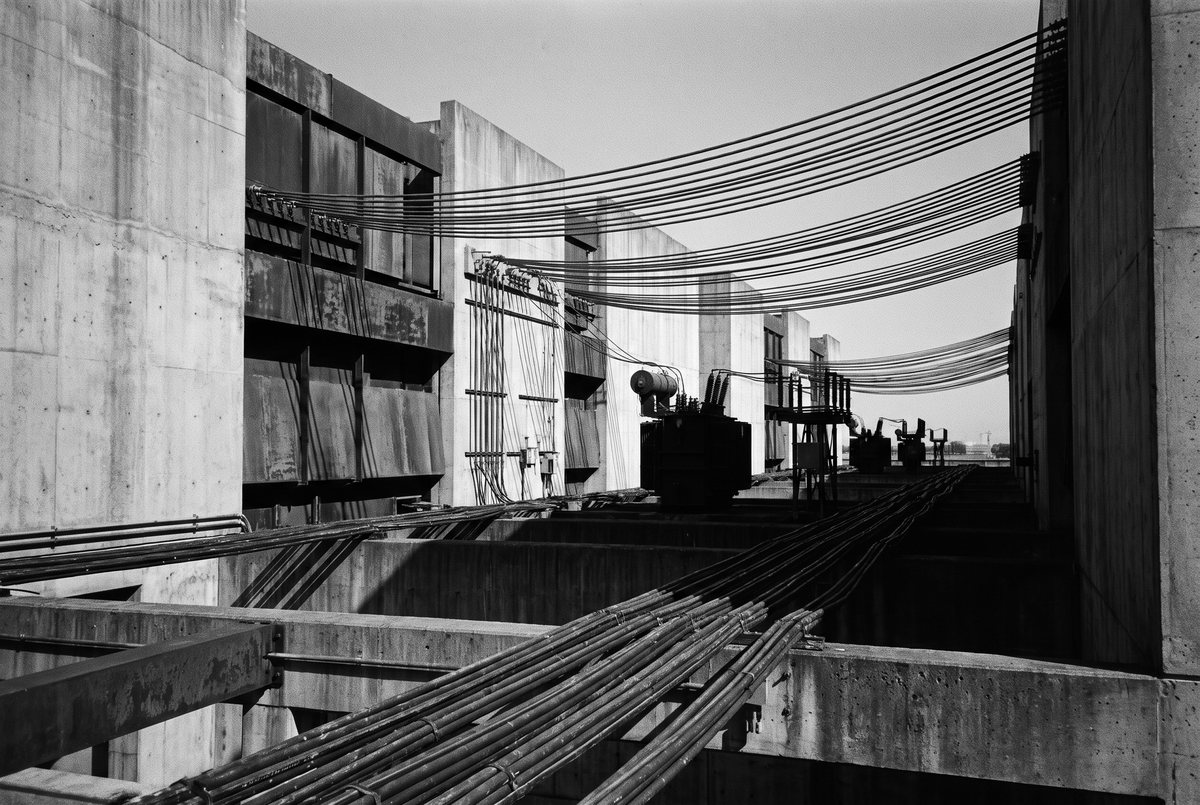
Follow that physical chain and different materials come into view. Copper serves electrical networks and circuitry. Silicon and other semiconductor materials appear in computing equipment. Gallium has applications in advanced chips and power electronics. Rare-earth elements have uses in specialised magnets and other technologies. The mix changes according to the equipment, its design and the wider power system supporting it; there is no single basket of "AI minerals" that rises in lockstep with every AI forecast.
Gallium shows why a small market can have an outsized strategic role. The IEA has estimated that China accounts for around 99% of global refined gallium supply, and that data-centre demand for gallium in 2030 could exceed 10% of today's total supply. That is not a prediction that gallium prices must rise. It is a warning that a narrow supply channel matters when demand from a growing industry passes through it.
The same principle extends well beyond AI. Electric vehicles, battery storage, wind turbines and larger electricity networks each draw on material supply chains. The IEA's 2026 outlook projects continuing growth in demand for nickel, graphite and magnet rare earths to 2040, while copper records substantial growth in volume. But the outlook differs by material and technology: battery designs can change, substitution is possible in some uses, and announced projects may improve supply. One cannot move responsibly from "technology is growing" to "this particular mineral asset will win" without doing the work between those statements.
02
Where value gathers

The familiar image of a strategic-minerals opportunity is a deposit. It is important — but it is only the beginning of the story.
A mineral must be extracted, processed to a usable specification and delivered to a manufacturer that can qualify and use it. Each step brings a different set of constraints. An abundant resource can be commercially remote if power, water, transport or financing is unavailable. A mine can operate while local refining capacity is missing. A refined material can meet its chemical specification yet still require further qualification before a customer will depend on it.
This is one reason the middle of the supply chain merits more attention. The IEA reports that mining projects outside dominant producing countries are advancing faster than the refining and downstream capacity needed to turn some of those materials into finished inputs. For magnet rare earths, its 2026 assessment finds that planned refining in geographically diversified regions amounts to roughly two-thirds of expected mined supply by 2035, while planned magnet production amounts to only about one-third. More mines, on their own, do not deliver a complete alternative supply chain.
The gap is not merely a matter of constructing a plant. Processing depends on equipment, specialised skills, consistent feedstock, technical know-how and a customer willing to commit. A new supplier may also face higher costs than an established producer. According to the IEA, capital costs for refining projects outside a dominant supplier can be substantially higher, with operating costs also affected by energy and feedstock prices. Those disadvantages can leave a strategically desirable project commercially fragile.
Here lies a more interesting investment question than the headline growth rate of AI: where is the capability that customers need but cannot readily obtain elsewhere? It may be in a mine with unusually favourable characteristics. It may be in a refinery, a qualified intermediate product, a recovery process or an offtake arrangement that makes a difficult project financeable. Sometimes the most important asset is not the most visible one.
A bottleneck creates a reason to investigate; it does not settle the investment case.
That does not mean every bottleneck is an opportunity. A shortage may attract new capacity. Customers may redesign equipment. Policy may change, or a high-cost entrant may discover that buyers value resilience but will not pay enough to sustain it. A bottleneck creates a reason to investigate; it does not settle the investment case.
03
The counterargument
It is tempting to treat the advance of technology as an argument that mineral demand — and therefore mineral value — can only move in one direction. History gives little reason to be so comfortable.
First, technology changes the materials it requires. Battery chemistries do not all use the same metals in the same proportions. Computing equipment becomes more efficient even as demand for computing grows. The IEA notes that energy use per individual AI task has fallen rapidly, while more demanding uses are emerging. The eventual physical demand depends on both trends, not on either one in isolation.
Second, supply responds — sometimes slowly, but not always predictably. New projects advance, existing producers expand and recycling develops. The IEA's 2026 assessment reduced its projected 2035 copper supply gap compared with the prior outlook as additional projects moved forward, though a substantial gap remained in its base case. A forecast can be directionally useful and still change materially as projects, policy and demand evolve.

Third, strategic importance and investor returns are different things. A government may need a domestic source of a material; a manufacturer may need supply security; neither fact guarantees that the company building the new capacity will earn an attractive return. The location, terms of financing, customer commitments and operating costs remain decisive.
Finally, extraction and processing impose real demands on communities and environments. Water, energy, land use, waste, labour conditions and local consent are not peripheral questions to be addressed after the financial model is complete. They shape whether a project can be built, operated and trusted for the long term. A resource with a compelling global use can still be the wrong project in the wrong place.
None of these objections removes the opportunity. They make its outline sharper. The stronger thesis is not that every critical mineral is scarce, or that every mine is valuable. It is that advancing technologies expose dependencies — and careful work can distinguish durable dependencies from temporary excitement.
04
The long view
The next wave of technology will be judged by what it can do. It will also be shaped by what the world can build to support it.
The numbers are large, but their meanings must stay separate: AI-market revenue, economic impact, infrastructure spending and mineral sales are not interchangeable measures. The $10.2 trillion AI-market forecast for 2026–2030 proposed for this article could not be verified from a source defining that figure and period, so it has not been used as a factual claim. Brookings' $10.3 trillion estimate measures a different thing: projected cumulative US AI-infrastructure investment over 2025–2032.
For anyone examining strategic minerals, the discipline begins below those headline figures. What exact material does a technology require? In which component, at what specification and in what quantity? Where is supply concentrated? Can the material be refined, qualified and delivered on the timetable the customer needs? What might replace it? And, after all those questions, can a particular asset participate on terms that make economic sense?
These are less spectacular questions than a trillion-dollar forecast. They are also more likely to reveal something useful.
An opportunity can remain unseen because the market has overlooked it. It can also remain unseen because it has not yet survived the scrutiny required to make it real. The task is to tell the difference. That is where the future stops being a slogan and becomes a decision.
Note: General commentary, not investment advice.